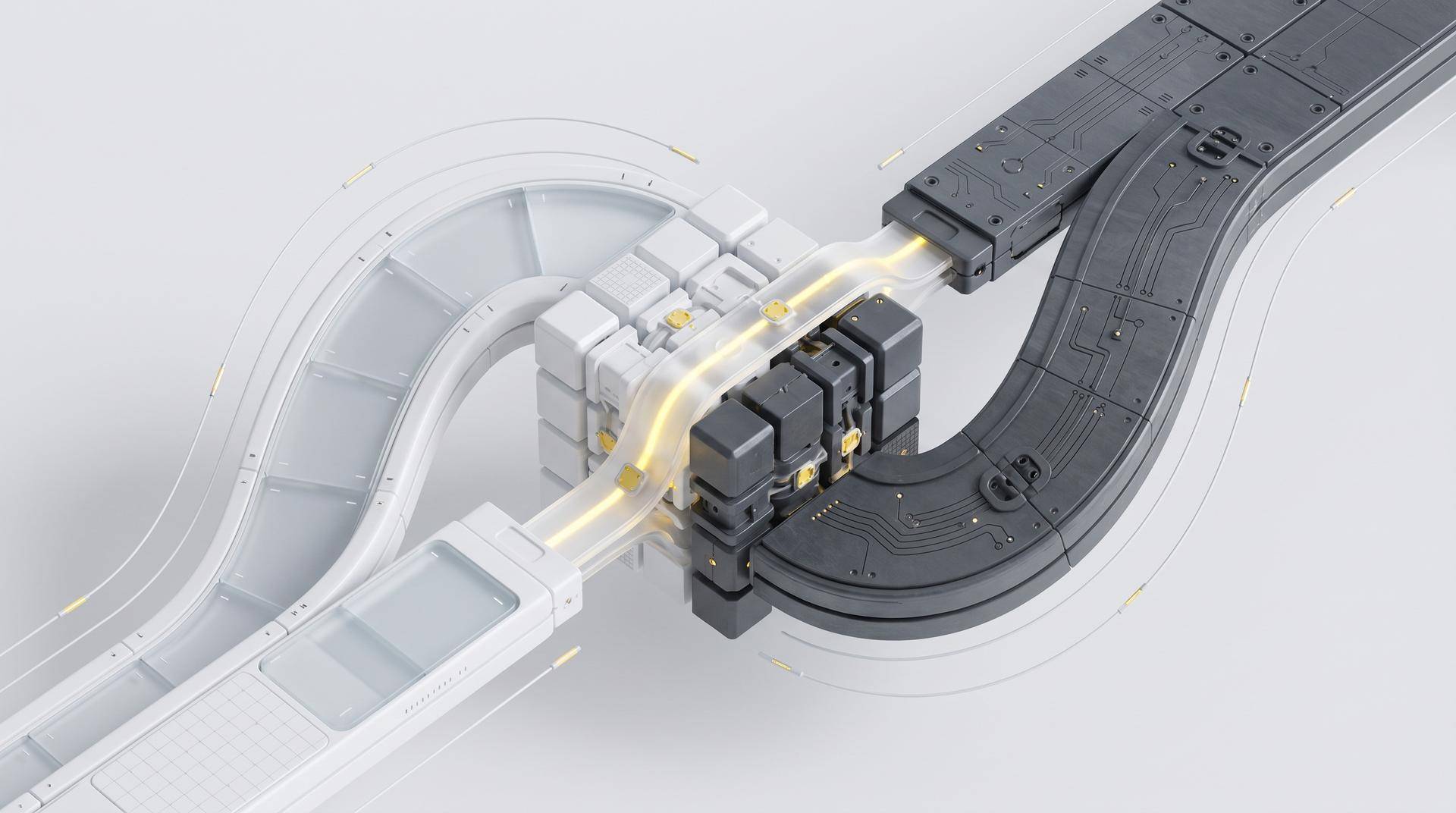
Most conversations about websites collapse design and development into a single bucket. That confusion is costly. It slows decisions, inflates scope, and creates avoidable risk. In a market where generative AI is accelerating both disciplines, leaders need a sharper line of sight into what each practice actually does, where they intersect, and how to structure teams for speed without sacrificing quality.
Design and development are different crafts that should operate as one system. Treat them that way and your site becomes a growth engine, not a brochure with nice typography.
What design covers, what development delivers
Design defines the promise and the experience. Development makes it perform, scale, and integrate with your business. Put simply:
Website design: Brand translation, information architecture, UX flows, interaction patterns, visual identity in motion, content hierarchy, accessibility planning, and conversion strategy. Great design reduces cognitive load, guides attention, and builds trust.
Website development: Front end and back end implementation, CMS configuration, integrations, security, performance, search optimization foundations, and analytics instrumentation. Great development produces resilient, fast, maintainable systems.
In practice, design determines what should exist. Development determines how it exists, and how it evolves after launch.
Where the handoff breaks, and how AI changes the equation
Historically, the most expensive problems live between Figma and production code. Static mockups meet real data and edge cases, then timelines slip while teams patch gaps. Today, AI is attacking that bottleneck from both sides:
Text to UI and intelligent design environments generate editable, component based layouts from prompts, short briefs, or wireframes. Design to code tools can output production oriented code from screens, including modern stacks like React with utility CSS. These tools reduce rework and speed the path to QA.
The promise is real, but there are caveats. Industry reports indicate AI can compress product timelines significantly. At the same time, trust in AI generated code quality has lagged, and security review is non negotiable. Vibe coding workflows and autonomous agents are powerful accelerators, yet they tend to produce output that requires human architecture, code standards, and accessibility checks. The practical lesson for leaders is simple: use AI to eliminate grunt work, not governance.
The roles are shifting: from makers to curators of intent
Generative tools are changing what designers and developers do all day. The emerging pattern is clear:
Designers: Less time nudging pixels, more time defining systems, content models, and decision logic. Design tokens, component naming, and accessibility criteria become strategic levers.
Developers: Less time writing boilerplate, more time establishing architecture, security controls, and performance budgets. The developer becomes the human operator who audits, integrates, and hardens AI output.
Clarity of intent is now a competitive advantage. Teams that write crisp briefs, success criteria, and guardrails get more leverage from AI, and avoid costly refactors later.
A decision framework for founders scoping a site
Before you pick a CMS or ask for a design concept, define the operating constraints. Use this checklist to de risk scope and align design with engineering from day one:
Business outcomes: What has to move within 90 days of launch, for example qualified leads, demo requests, partner signups, direct sales.
Brand posture: Are you maintaining equity or repositioning. New narrative often requires new information architecture and content.
Content model: Static pages, dynamic collections, localization, gated content, video heavy storytelling, knowledge base. Content structures drive CMS choice and development effort.
Experience model: Key journeys, decision points, micro interactions, personalized states, and empty states.
Data layer: CRM integration, marketing automation, analytics and events, consent management, audience segmentation.
Complexity: Third party integrations, pricing calculators, product configurators, search, multi language, role based permissions.
Performance: Speed targets by device and region, image strategy, caching, CDN, and performance budgets.
Compliance: Accessibility targets, privacy, data residency, audit logging.
SEO and AEO: Schema markup strategy, content depth, internal linking, and answers optimized for AI search engines.
If these areas are not defined, you are not ready for design concepts or sprints. You are guessing, and guesses are expensive.
Design first or development first
Neither. Strategy first. Sequence your work like this:
1. Positioning and narrative: The story the site must prove. Without this, visual exploration is decoration.
2. Information architecture: How content should be organized, labeled, and discovered.
3. Interaction model and key flows: The fastest path to a request, inquiry, or purchase.
4. Component library and design tokens: The building blocks that make the site consistent and scalable.
5. Technical architecture: CMS selection, hosting, security model, integration plan, observability.
6. Implementation: Parallelize front end and back end against a shared component inventory and API contracts.
7. QA, accessibility, and performance: Validate before launch, not after.
How to use AI in web projects without inviting risk
AI belongs in the loop, not on autopilot. Practical guardrails keep speed gains without sacrificing resilience:
Treat prompts like specifications: Include audience, tone, constraints, data sources, and acceptance criteria.
Generate options, then converge: Use AI to create multiple layout variants and microcopy. Decide with clear heuristics, for example readability, focus, and ADA compliance.
Codify a design system early: Tokens for color, spacing, typography, and motion reduce inconsistencies AI tends to introduce.
Enforce code standards: Linting, formatting, dependency policies, and reviews by senior engineers prevent long term debt.
Layer security reviews: Static analysis, dependency scanning, and penetration testing. AI can help find issues, it cannot be the only line of defense.
Instrument everything: Analytics events, conversions, error tracking, and uptime monitoring. What is not measured cannot be improved.
What you are buying when you pay for design vs development
The investment profiles are different because the value creation is different.
Design investment yields: Brand clarity, credibility, conversion efficiency, customer confidence, and internal alignment around a shared visual language.
Development investment yields: Reliability, speed, scalability, maintainability, and the ability to adapt quickly to new opportunities.
Budget structures reflect that reality. Smaller institutional sites with clear scope and limited integrations sit at the lower range. Complex builds with custom systems, internationalization, or heavy automation sit higher. The most expensive sites are the ones rebuilt twice because strategy and architecture were not settled before sprints began.
Team models that work, and when to use them
Integrated studio: One team owns strategy, design, and engineering. Best for speed, accountability, and coherence, especially when repositioning the brand or building a new design system.
Design partner plus internal dev: Effective when you have a strong in house engineering team and need brand elevation and UX leadership. Requires a disciplined design to code handshake and shared standards.
Dev partner plus internal design: Viable for product led organizations where design systems already exist and the job is mainly implementation and integration.
Whichever model you choose, insist on a single source of truth for components and tokens, a documented content model, and a formal release calendar.
What great looks like in 2026
High performing websites in this cycle share a pattern:
Clear point of view: A narrative that signals authority immediately, reinforced by proof and social validation.
Intentional architecture: Navigation aligned to jobs to be done, not internal org charts.
Accessible by design: Contrast, keyboard navigation, and semantic HTML. Accessibility improves SEO and conversions.
Performance by default: Sub second interaction on mobile, optimized media, and rigorous caching.
Semantic SEO and AEO: Structured data, FAQ patterns, product and service schemas, and content written to be understood by both humans and AI systems.
Measured conversion paths: Event taxonomies mapped to outcomes, experiments in place, and dashboards that show cause and effect.
Maintainable codebase: Components with single responsibility, typed interfaces, and dependencies managed with discipline.
Generative AI in practice: realistic applications for websites
Rapid prototyping: Generate first pass UI and microcopy to validate flows with stakeholders in days, not weeks.
Design to code bridges: Convert approved screens into scaffolded components, then have engineers harden them for production.
Content acceleration: Draft long form pages, meta descriptions, alt text, and localization variants, then edit for brand voice and accuracy.
Automated QA: Use AI agents to crawl flows, generate test cases, and surface regressions before launch.
Equally important, know the limits. AI may propose code or patterns that pass a demo but fail security, accessibility, or maintainability checks. Oversight is not optional.
Governance after launch
Great sites are managed like products, not projects. Establish operating rituals:
Quarterly strategic reviews: Reassess message market fit and content gaps.
Monthly CRO cycles: A or B tests on headlines, CTAs, forms, and page layouts.
Security hygiene: Patch schedules, secrets rotation, and role reviews.
Accessibility and performance audits: Measure and remediate on a cadence.
Content operations: Editorial calendar, brand voice guardrails, and localization QA.
The rise of agents and long context models will continue to compress build and maintenance cycles. Long documents and entire design systems can live in model context during design and dev work, which improves consistency when used responsibly. The job of leadership is to set the quality bar and enforce the process that meets it.
Key questions to ask before you greenlight a web project
What business outcomes must the site drive in the first quarter after launch, and how will we measure them.
Which audiences and jobs to be done are we prioritizing, and how does that map to the navigation and content model.
What are our accessibility, privacy, and performance targets, and who owns compliance.
What is our CMS and integration plan, including analytics, CRM, and marketing automation.
Which parts of the workflow will we accelerate with AI, and what human reviews are required before release.
What is the component and token strategy, and how will design and development share a single source of truth.
What is our release calendar, QA process, and incident response plan.
Website design vs website development, in one line
Design earns attention and trust. Development turns that attention into reliable, measurable outcomes. Both matter. In the era of generative AI, the winning move is to orchestrate them together with clarity of intent, strong governance, and a team that blends brand strategy, experience design, and engineering excellence.
The brands that will look bigger, grow faster, and command authority are the ones that treat their website like a system. They align story with structure, craft with code, and speed with standards. That is how a website stops being a cost center and becomes a strategic asset.