Introduction
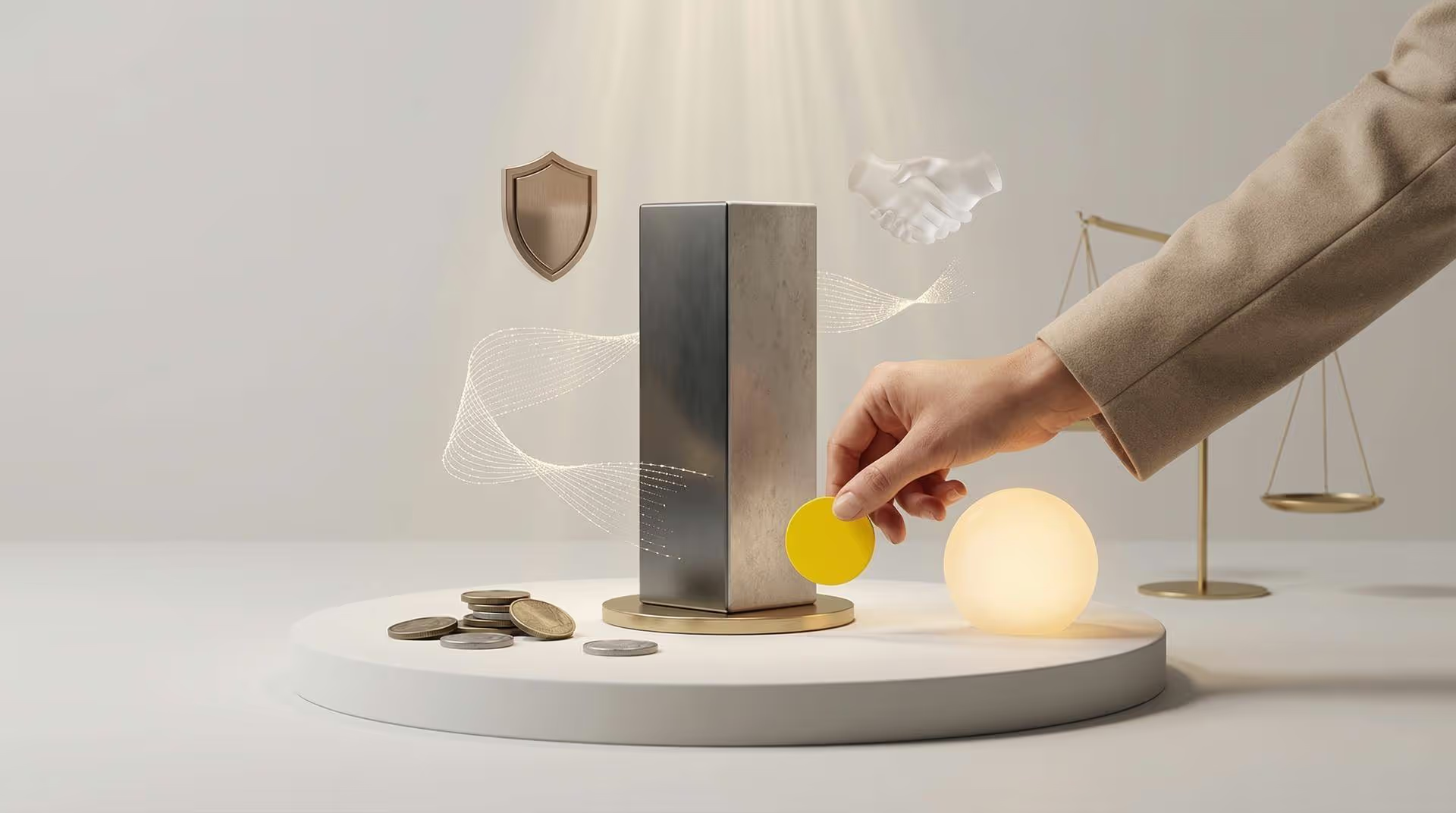
Quiet luxury is more than an aesthetic trend, it is a shift in how affluent audiences judge value. Overt logos and performance signaling have given way to subtlety, material proof, and experiences that reward an educated eye. For founders and marketing leaders aiming to position their businesses at the premium end, adopting quiet luxury is not optional, it is strategic. It reduces reputational risk, increases resale value, and aligns with sustainability and authenticity demands from discerning customers.
What Quiet Luxury Means in 2026
Quiet luxury, sometimes called stealth wealth, privileges intrinsic value over visual noise. In 2026 the movement has three defining characteristics:
Material Authority: Craftsmanship and premium inputs are the primary signals of quality, not visible logos.
Proof Over Promise: Verifiable provenance, such as Digital Product Passports and lifecycle transparency, replace vague claims.
Human Context: Personalization is subtle, delivered through private experiences, invitation-only access, and tailored communications.
This version of quiet luxury is evolving beyond minimal palettes, to include character dressing, tactile fabrics, and calm technology. The goal is to be recognized by those who know, and to remain discreet to those who do not.
Why This Matters for Growing Companies
For the Studio Yellow audience, the implications are direct and measurable:
Credibility and Market Authority. Premium positioning shortens sales cycles with enterprise clients and allows price premiums that improve margins.
Reputation Risk Management. Quiet luxury reduces the chance of backlash in volatile economic climates, by avoiding ostentatious displays that can appear tone deaf.
Longevity and Resale Value. Brands that invest in craftsmanship and transparency protect product value in secondary markets.
Efficient Marketing. Targeted, invite-driven activations cost less than broad spectacle, while producing higher lifetime value customers.
Leaders we work with care about measurable outcomes. Quiet luxury supports higher customer lifetime value, stronger referral pathways, and cleaner brand equity, when implemented with data and discipline.
Studio Yellow Perspective: How We Translate Quiet Luxury into Strategy
MAYA-Informed Creativity, with Real Restraint
We apply the MAYA principle, balancing the most advanced ideas with broad acceptability. Quiet luxury requires restraint, but not absence of personality. We refine visual language so it conveys substance, while remaining accessible to the right audience.
Data-Driven Proof of Authenticity
We combine customer research and resale market analysis to pick material and production decisions that preserve value. Where appropriate, we integrate Digital Product Passports, so provenance is verifiable and supports premium pricing.
Human-Led AI Personalization
We use AI to optimize CRM, personalization, and operational efficiency, while keeping the human touch in storytelling, client care, and craft narratives. This avoids AI backlash and reinforces authenticity.
These approaches let us create premium brands that feel exclusive, but are strategically scaled for growth.
How to Implement Quiet Luxury in Your Brand: A Practical Playbook
Below are tactical steps tailored to founders, CMOs, and product leads who need executable guidance.
1. Audit Your Signals
Review every touchpoint for loud logos, discounting behaviour, and low-cost materials. Prioritize fixes that impact perceived value most: product imagery, packaging, and flagship experiences.
2. Define Proof Metrics
Choose measurable authenticity signals: material sourcing, maker stories, Digital Product Passports, limited production runs, and resale performance. These become the basis for messaging and pricing.
3. Rework Visual Identity
Move to a restrained identity system: fewer typefaces, a calm color palette, and a clear iconography hierarchy. Preserve distinctiveness through proportion, negative space, and premium typography rather than logos.
4. Rewrite Product Narratives
Convert claims into evidence-based stories. Use production timelines, artisan profiles, and lifecycle data. Position each piece as an investment, not a commodity.
5. Design Quiet Experiences
Create private shopping, appointment-based launches, and invite-only content. Use calm tech, such as low-notification interfaces and high-fidelity product visuals, to reduce noise and promote focus.
6. Calibrate Pricing and Distribution
Limit discounting, control inventory channels, and consider direct-to-source models when they preserve margin and authenticity. Monitor resale to ensure long-term value.
7. Apply AI with Human Oversight
Use GenAI to analyze customer segments and optimize touchpoints, but keep final creative and client interactions human. Audit AI outputs for tone and craft authenticity.
8. Measure and Iterate
Track Net Promoter Score, resale prices, repeat purchase rates, and customer acquisition cost by channel. Use these metrics to refine product choices and communication.
Examples and Signals that Work
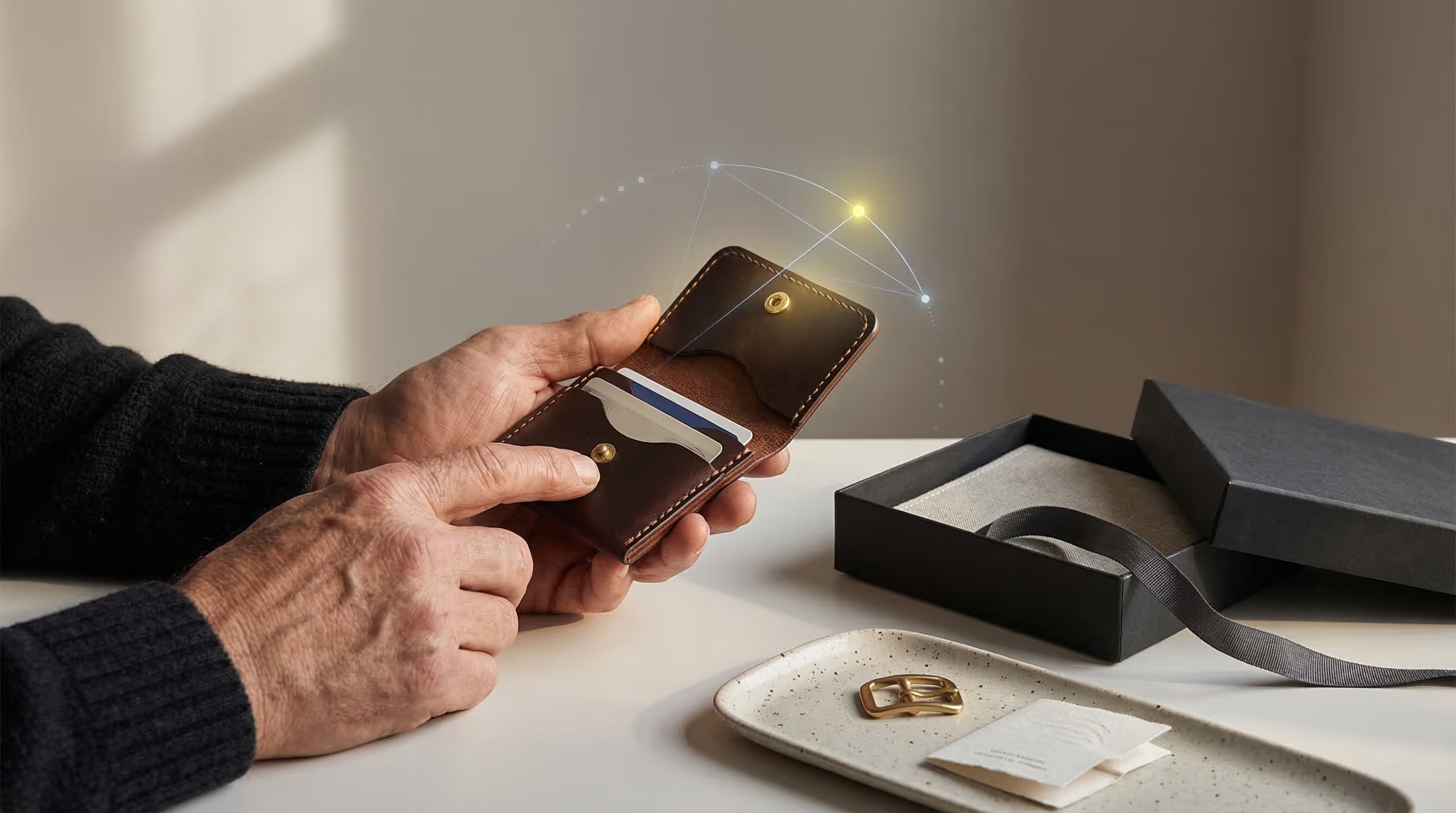
Product Photography: Close-up imagery of stitch details, fabric texture, and hardware, combined with sparse scene-setting imagery, signals craft.
Packaging: Durable, reusable packaging with minimal printing communicates thoughtfulness and reduces perceived disposability.
Technology: Ghost displays, muted haptics, and furniture-like casing in devices make tech feel more premium and calm.
Hospitality: Private check-in, sound design, and tactile materials create emotional regulation, which aligns with quiet luxury.
Conclusion
Quiet luxury is a strategic positioning that rewards discipline, evidence, and human storytelling. For companies ready to claim premium status, it requires more than visual minimalism, it requires systems that preserve value, prove authenticity, and create private, memorable experiences. Studio Yellow blends MAYA-led creativity, data-driven proof, and human-first AI to help brands move from ordinary to extraordinary.
If you are serious about elevating your brand into the premium tier, consider a focused audit that aligns product, narrative, and distribution. Reach out to explore how a strategic quiet luxury approach could strengthen your market authority and long-term value.
FAQ
1. What is the difference between quiet luxury and traditional luxury?
Quiet luxury emphasizes subtlety, craftsmanship, and verifiable provenance, while traditional luxury can rely on overt branding, emblematic logos, and visible status symbols.
2. Can small brands adopt quiet luxury without large budgets?
Yes. The principle is about prioritization. Invest in product quality, clear provenance, and refined communication. Many high-impact changes are strategic, not purely expensive.
3. How does Digital Product Passport technology support quiet luxury?
DPPs provide verifiable records of origin, materials, and lifecycle events. This proof reduces authenticity doubts and justifies premium pricing.
4. Should a premium brand avoid all logos?
No. Logos can remain, but they should not be the primary quality signal. Use logos sparingly, and focus on material and craft cues as the main indicators of value.
5. How do you balance AI personalization with authenticity concerns?
Use AI for analysis and personalization, but keep story creation, client relationships, and artisanal claims rooted in human verification and oversight.
6. How does quiet luxury affect marketing channels?
It favors invitation-based channels, private events, curated partnerships, and high-quality content over mass spectacle and discount-driven ads.
7. What metrics indicate successful quiet luxury positioning?
Look at resale value, repeat purchase rate, customer acquisition cost, average order value, and brand sentiment among target cohorts.
8. How can hospitality and residential brands apply quiet luxury?
Focus on privacy, tactile materials, calm lighting, and services that prioritize emotional regulation and bespoke moments over conspicuous display.
9. Does quiet luxury work in tech and automotive categories?
Yes. Quiet tech uses subtle interfaces and premium materials, while automotive quiet luxury emphasizes silent cabins, refined materials, and wellness features.
10. How long does it take to reposition a brand toward quiet luxury?
Repositioning timelines vary, but meaningful impact is visible within 6 to 12 months for focused product and communication changes, and within 12 to 36 months for full product lifecycle and resale effects.