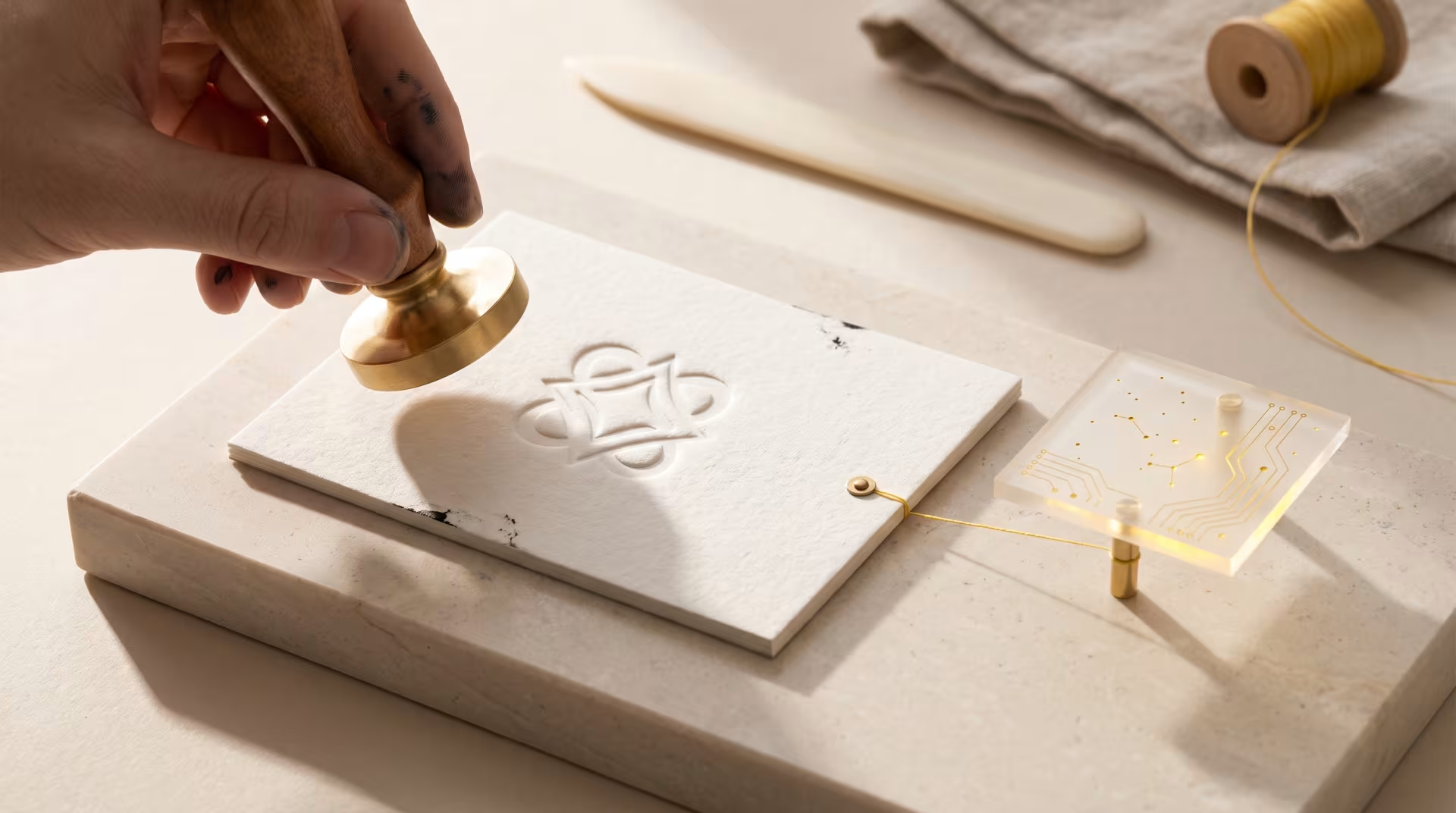
You do not command a premium by looking expensive. You command a premium by making the value behind the price unmistakable.
In 2026, that value is increasingly signaled through visible human effort, clear provenance, and strategic design choices that algorithms cannot convincingly fake.
The shift: from efficiency to authenticity
For the past three years, the market celebrated speed. The question was simple: how fast can we produce more content with AI. That era created an unintended side effect, algorithmic immunity. Buyers learned to scroll past the sterile and the overproduced. Today the question has changed. What signals prove this brand is led by judgment, by taste, by humans who care.
Why strategic design sets the price
Strategic design does more than shape perception. It shapes willingness to pay. Three drivers explain the premium gap emerging between the synthetic and the handcrafted.
Scarcity: Generative perfection is infinite and cheap. Human time, imperfection, and craft are scarce, so they read as luxury.
Meaning: People do not buy a font or a color. They buy the story embedded in choices, the evidence of intent, the cultural references only a human tracks.
Trust: In uncertain markets, buyers pay to reduce risk. Authentic process, verified provenance, and consistent execution reduce risk, so they justify higher prices.
The human craftsmanship premium is measurable
Signals of human authorship are not just an aesthetic play. They shift economic outcomes.
66% of global consumers believe creative content crafted solely by humans should be priced significantly higher than AI-generated alternatives, and 78% view AI imagery as inauthentic, according to the Getty Images Visual Trend Report.
47% of global consumers believe humans still hold the advantage in creativity and imagination, versus 30% for AI, according to VML Intelligence.
Aerie reported a 23% increase in Q4 sales after committing to a No AI policy in its marketing.
These are not sentimental preferences. They are price and volume signals. Strategic design that foregrounds human authorship is converting to revenue.
What premium now looks like, across touchpoints
Luxury has always been a language. The alphabet is changing. Leading brands are codifying a tactile, imperfect, unmistakably human vernacular.
Brand identity and packaging: Raw, uncoated papers, blind embossing, letterpress impressions, visible ink variations, and grain. Packaging that carries the story of its making becomes a physical trust signal.
Web and digital product: Textured backdrops, custom-drawn micro-animations, stop-motion inspired loops, and intentionally irregular UI accents move the web away from template sameness.
Fashion and product: Raw edges, visible topstitching, brush-stroke graphics, and intentional abrasions position wear and age as modern markers of quality.
Content and campaigns: Behind-the-scenes assets that show rigs, models, and takes, not just edits. Apple's deconstructed shoots, Hermès commissioning hand-illustrated environments, and beauty brands showcasing well used packaging signal care and craft.
These moves are not nostalgia. They are market positioning. They make the human premium legible.
Proof, not posture: the new architecture of trust
Aesthetic signals are table stakes. Verification is where price power compounds. As awards bodies tighten AI disclosure and scandals surface, provenance is moving from nice to have to mandatory. Three layers matter.
Cryptographic provenance: C2PA Content Credentials embed a signed manifest in files that detail the creation process. Brands can adopt C2PA across hero assets, photography, motion, and key visuals to make integrity portable across platforms.
Third-party auditing: Emerging verifiers like HUMAVE, HUMA, and the Human Made Foundation require timelapses, project files, and process evidence before granting a Human Made mark. Independent audits reduce greenwashing and counterfeit claims.
Declarative standards: Clear public guidelines for when AI is used, how it is constrained, and how human judgment governs the process. Declaring the rules, then living them, builds compounding trust.
When provenance becomes visible and consistent, buyers develop confidence. Confidence raises acceptable price ranges.
Clients pay for judgment, not generation
AI has compressed execution time, which is why billing by hours is fading. The market is resetting around the human premium. Taste, creative courage, and cultural intelligence are the new margin drivers. For agencies and in-house teams, that changes pricing narratives.
Price the strategic layer: Positioning, narrative architecture, and design systems that endure are where value concentrates.
Price the signature: One handcrafted hero asset can anchor a campaign, while derivative variations scale with automation. The premium sits on the signature piece, not on volume.
Price the proof: Verified provenance, process documentation, and limited editions with authenticated runs deserve their own line item. Buyers understand why they cost more when the rationale is explicit.
At Studio Yellow, we see this shift daily. Leaders are not asking how to get more content. They are asking how to make fewer, more irreplaceable assets that hold price.
Strategic design moves that create pricing power
Use design as an economic instrument, not a decoration. The following practices increase price realization across categories.
Concentrate craft where attention concentrates: Identify the three to five high-visibility touchpoints that influence buying decisions, then apply deep human craft to those moments. Examples include packaging panels photographed by retailers, the first screen of a product tour, or the hero module on a category page.
Make the making visible: Publish annotated process reels, timeboxed studio sessions, and annotated artifacts. Do not just show the result, show the rationale and the hand.
Engineer tasteful irregularity: Introduce micro-variations that signal human involvement without harming usability. Letterpress textures, imperfect shadows, sightline misalignments that echo analog tooling, and bespoke iconography calibrated for legibility.
Codify provenance in the system: Bake C2PA into your asset pipeline, from cameras to export scripts. Train teams to maintain provenance without friction.
Build a limited series mindset: Editioned runs with serialized marks, small-batch packaging, and drop calendars turn time and scarcity into planned value.
Balance AI with authorship: Use AI for exploration and iteration speed, then commit to human-led curation and finishing. Disclose this balance in plain language.
Each move is small on its own. Together, they add up to a brand buyers trust more, and odds are they will accept a higher price.
Operations, because premium must still scale
The Anti-AI aesthetic does not mean anti-operations. The friction is real. Slow design and commercial cadence often collide. A pragmatic operating model can reconcile craft and speed.
Handcrafted cores, automated peripheries: Produce human-made hero assets each quarter. Surround them with AI-assisted adaptives and derivative formats to feed channels without diluting the core.
Agile cadences, craft sprints: Define windows for deep craft in the roadmap. Protect them from last-minute swaps. Outside those windows, work in agile cycles with clear definitions of done.
Vendor ecosystems: Align printers, photographers, finishers, and editors who can deliver tactile effects at scale. Reliability is part of the premium.
Disclosure workflows: Add AI use, provenance checks, and rights clearance to your preflight and QA. Make compliance part of quality, not an afterthought.
Studio Yellow blends these practices with a data-driven mindset, because premium positioning only works when operations keep promises made by the brand.
What to measure when you raise prices
Premium is an outcome, not a style. Treat it like any other business hypothesis and measure it.
Price realization: The percentage of full list price captured after discounts. Track by channel and customer segment.
Gross margin lift: Compare pre and post initiative margins for SKUs or services tied to human crafted assets.
Conversion at premium tiers: Monitor win rates when quoting higher tier options that include provenance and limited series elements.
Engagement with process content: Watch completion rates on behind-the-scenes videos, dwell time on craft pages, and saves or shares.
Brand search and direct traffic: Increases often correlate with credibility gains from authenticity narratives.
Content credential detection: Track the percentage of assets shipping with valid C2PA manifests, and the error rate.
Awards and press quality: Esteem indicators are not vanity if they show up as improved consideration and pricing power.
Numbers do not lie. If craft is creating economic value, you will see it in these metrics within a quarter or two.
Common traps and how to avoid them
The AI paradox: Using AI to simulate human flaw while claiming anti-AI positioning erodes trust. If AI is used, say so, then explain where human judgment led.
The uncanny flaw: Overdone textures and chaos that harm usability backfire. Calibrate irregularity for legibility and performance.
The verification gap: Slapping a Not by AI badge without cryptographic proof invites scrutiny. Adopt C2PA and, when material, third-party audits.
The scale cliff: Handcrafted everything is not sustainable. Decide what must be human and what can be assisted, then hold the line.
The cost mirage: Leaders sometimes assume craft only raises cost. The right craft, concentrated in the right moments, raises price realization more than it raises cost.
Discipline is the defense. Clarity of method and proof reduces risk while preserving the edge.
Industry signals worth watching
Pricing models: Agencies are decoupling price from hours. Expect more outcome-linked fees tied to strategic design impact on margin and growth.
Festival standards: With mandatory AI disclosure becoming a norm across major award bodies, prestige is flowing to verifiable human work.
Provenance infrastructure: C2PA adoption across device makers and software stacks will simplify compliance and discoverability.
Consumer education: As platforms begin to surface content credentials in UI, buyers will quickly learn to look for proof of origin.
Brands that get ahead of these waves will spend less time explaining and more time pricing.
What this means for leaders now
Strategic design is no longer a cost center you justify with taste. It is a pricing instrument. In an economy flooded with generative lookalikes, the path to premium runs through human judgment, visible craft, and verifiable provenance. This is not about rejecting AI. It is about reclaiming what only humans can do, then building the systems that prove it at scale.
Studio Yellow's practice is built on this balance. We pair multicultural market insight with modern design craft, integrate AI where it accelerates exploration, and insist on human authorship where it creates value. We operate with data, we move with agility, and we treat brand as a growth engine. For leaders who are serious about charging more, that is the work: codify your taste, show your hand, prove your origin, and let the market do the rest.